

Healthcare Conversational AI Examples: 7 Ways Care Teams Use It
Ready to Build Something Great?
Book a free strategy call with our team and let's turn your idea into reality.
Share This Blog
Conversational AI in healthcare sounds big and vague. Many leaders ask a simple question. What does it actually look like in daily work? This guide answers with real, practical healthcare conversational AI examples. Each one shows a task, a result, and a limit. As a result, you can spot which idea fits your own clinic or health system in the United States.
Why These Healthcare Conversational AI Examples Matter
US care teams are stretched thin. Nurses answer the same questions all day. Front desks juggle calls, forms, and walk-ins. Meanwhile, patients want quick answers on their own time.
Conversational AI helps with the repeat work. It talks in plain language, by text or by voice. Then it hands hard cases to a person. Therefore, staff keep the work that needs skill and kindness.
Not every tool fits every team, though. A small clinic needs different help than a large hospital. That is why real healthcare conversational AI examples are so useful. They let you compare ideas before you spend any money.
Example 1: Forms That Fill Themselves Before the Visit
Paper forms slow everyone down. Patients rush in, fill clipboards, and run late. Staff then retype the same facts.
AI patient intake fixes much of this. The tool chats with the patient a day before the visit. It asks about the reason for the visit, current medicines, and allergies. Then it sends a clean summary to the care team.
For example, a patient may type, "My knee hurts when I climb stairs." The tool asks a few follow-up questions. Next, it adds the answers to a draft of the chart. As a result, the doctor starts the visit with facts, not blanks.
Still, staff should review every summary. Patients sometimes mistype or forget details. Good AI patient intake makes that review fast, not optional. Among all healthcare conversational AI examples, it is one of the easiest to start.
Example 2: A Friendly Check-In After Discharge
The days after a hospital stay are risky. Patients go home with new medicines and long instructions. Many forget half of it by dinner.
Here, a text or voice check-in helps. Two days after discharge, the assistant sends a message. It asks, "How are you feeling today?" Then it asks if the patient picked up each medicine. Further, it checks whether a follow-up visit is booked.
If an answer sounds worrying, the tool alerts a nurse at once. Otherwise, it simply logs the reply. In this way, nurses spend their time on the patients who need a call. It is one of the most caring healthcare conversational AI examples.
US texting rules matter here. Clinics need patient consent before sending texts. So, ask for it at sign-up and make opting out easy.
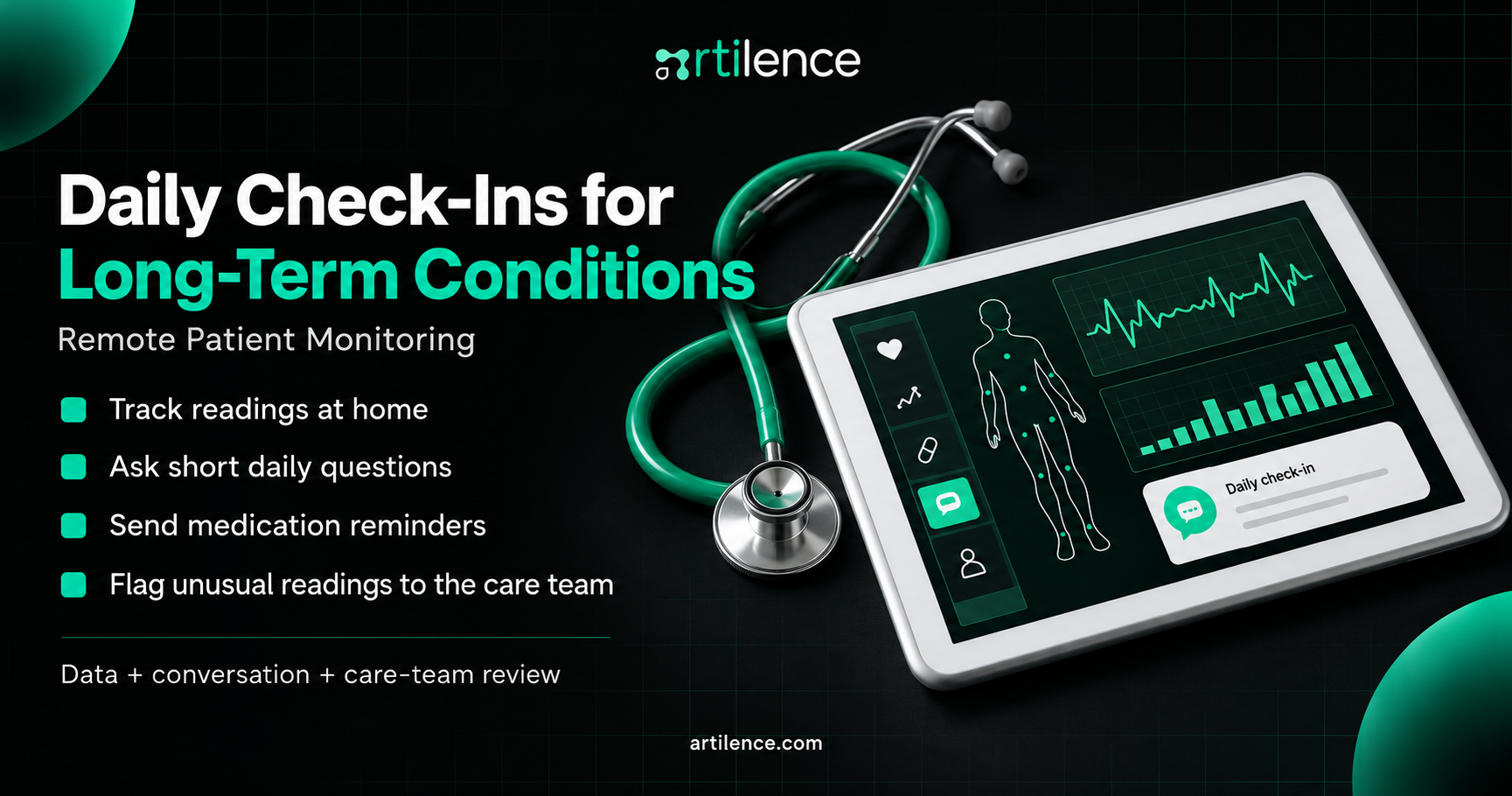
Example 3: Daily Check-Ins for Long-Term Conditions
People with diabetes, heart failure, or asthma need steady support. A visit every few months is not enough. Small changes can grow fast between visits.
Conversational AI pairs well with remote patient monitoring. A patient wears a device or enters numbers at home. Then the assistant asks short questions. One might be, "Did you check your blood sugar today?" It can also remind people to take their medicine.
When readings look off, the tool tells the care team. Meanwhile, patients get simple tips from an approved plan. Strong remote patient monitoring needs both data and conversation. Numbers alone do not explain why a day went badly.
Example 4: Support Between Therapy Sessions
Therapy often happens once a week at best. Hard moments, however, come at any hour. Some people also wait weeks for a first visit.
A mental health chatbot can fill small gaps. It can guide a breathing exercise or help a person track mood. It can also remind someone to do the homework a therapist gave.
However, this tool is not a therapist. It must not diagnose or treat. Furthermore, it must spot warning words and share the 988 Suicide and Crisis Lifeline right away. A trusted mental health chatbot also tells users they are talking to software. Honest labels protect trust. Used well, a mental health chatbot adds support and never replaces care. Few healthcare conversational AI examples need as much care as this one.
Example 5: First-Step Questions About Symptoms
Late at night, people search for their symptoms online. Results can scare them or send them the wrong way. A clinic's own AI symptom checker offers a calmer path.
It asks a short set of questions the clinic has approved. Then it points the patient to a next step. That step might be self-care tips, a same-week visit, or an urgent call. If someone mentions chest pain or trouble breathing, it says to call 911.
Importantly, a safe AI symptom checker guides people to the right level of care. It does not name a disease. Some software that diagnoses may fall under US Food and Drug Administration rules. So, keep the tool focused on sorting and guiding.
Example 6: Refills and Medicine Questions
Pharmacies and clinics get many calls about refills. "Is my prescription ready?" is a top one. Callers often wait on hold for a short answer.
An assistant can check the status and give pickup times. It can also remind patients how to take a medicine, using the label. Moreover, it can flag when a refill is due soon.
Yet it should never change a dose. Only a licensed professional can do that. If a patient asks about side effects, the tool should share general label facts. Then it should offer a call from a pharmacist. This keeps answers safe and keeps patients feeling cared for. These healthcare conversational AI examples are simple, yet they save hours.
Example 7: Help for Staff, Not Just Patients
Not every assistant faces patients. Some serve the team. New nurses ask where to find a form. Billers ask about payer rules. Everyone asks about shift swaps and time off.
An internal assistant answers these questions from approved documents. As a result, staff get answers in seconds instead of searching shared drives. This can also cut training time for new hires. Experienced staff gain too, because they stop answering the same question twice.
Many of these tasks need no patient data at all. For that reason, the risk is lower. Internal help is therefore a smart first project. Of all the healthcare conversational AI examples, it carries the least patient risk. Even so, protect any file that holds private details.
What a Good Hand-Off to a Person Looks Like
Every example above depends on one skill. The tool must know when to stop. A weak hand-off frustrates patients. A strong one saves them time.
Start with the story so far. The staff member should see the full chat in one place. Then the patient never has to repeat a single detail. Next, show the reason for the hand-off, such as a worried tone or a billing dispute.
Speed matters too. Tell the patient who will reply and how long it may take. For example, "A nurse will message you within 30 minutes." Clear promises reduce stress.
Finally, keep the same thread open. If the patient writes again, the chat should pick up where it left off. Good hand-offs make every one of these healthcare conversational AI examples feel safe and personal.
Where These Tools Fall Short
Every one of these healthcare conversational AI examples has limits. Know them before you launch.
First, the tools can be wrong. They may misread a message or invent an answer. A wrong reply from an AI symptom checker can send someone to the wrong place. Therefore, test with real questions and review chats each week.
Second, privacy rules apply. In the US, HIPAA covers patient data. Any tool that touches it needs strong protection and a signed vendor agreement. Ask your legal or compliance team to review each project.
Third, some patients want a person. Always offer one. A clear "talk to a human" button builds trust.
Finally, the tool must connect to your systems. A chatbot cut off from scheduling or records can only answer questions. It cannot finish tasks.
Choosing Your First Project
Seven healthcare conversational AI examples can feel like a lot. Use three simple questions to pick one.
- Does the task happen often? Repeat tasks give the fastest payoff.
- Is the risk low? Start where a wrong answer causes little harm.
- Can you measure it? Pick a clear goal, such as fewer missed visits.
With this test, many teams start with Example 1 or Example 7. Both are easy to measure and low in risk. Later, they add remote patient monitoring or follow-up calls once the team feels ready.
How Artilence Can Help
Artilence is a US-headquartered company that builds custom AI automation for healthtech teams. The team can design chat and voice assistants and connect them to your scheduling and records systems. Security stays in mind from day one. Do you want to turn one of these healthcare conversational AI examples into a working tool? Artilence can help you scope it and build it step by step.
What to Remember
The best healthcare conversational AI examples share one trait. They take on repeat work and leave judgment to people. AI patient intake, post-discharge check-ins, and staff help desks are good places to begin. Pick one, set a clear goal, and test it with real questions. Then grow from there. Done well, conversational AI in healthcare gives staff time back and gives patients faster, kinder help.
Frequently Asked Questions:
What are examples of conversational AI in healthcare?
Common healthcare conversational AI examples include appointment booking, pre-visit intake chats, and refill help. Others include symptom sorting, post-discharge check-ins, and staff help desks. Many clinics also use voice assistants for after-hours calls.
How does conversational AI work in a clinic?
It reads or hears a patient message and figures out what the person wants. Then it pulls the right facts from approved sources and replies in plain words. When it is unsure, it passes the chat to a staff member.
What are the benefits of conversational AI in healthcare?
Patients get faster replies at any hour. Staff spend less time on repeat calls and forms. Clinics may also see fewer missed visits.
How much does a healthcare chatbot cost?
Cost depends on the features, the system links, and the security needs. Simple tools often use a monthly fee, while custom builds cost more up front. Ask for a full quote that includes setup, training, and support.
Can conversational AI connect to electronic health records?
Often, yes. Many record systems offer secure connections that approved tools can use. A common plan is to start with read-only access and add more later.
Is a mental health chatbot a good replacement for therapy?
No. It can help with mood tracking and coping tips between sessions. A licensed therapist should still guide care, and anyone in crisis should call or text 988.
How accurate is a medical chatbot?
Accuracy depends on its training, its approved sources, and how well it was tested. No chatbot is right every time. Review real chats often and make sure a person checks anything that affects care.
Can conversational AI diagnose diseases?
It should not. A safe tool sorts questions and guides patients to the right next step. Only a licensed clinician can diagnose, and some diagnostic software falls under FDA rules.
How long does it take to launch a healthcare chatbot?
A simple tool for common questions can take a few weeks. Projects with record links, testing, and security reviews often take a few months. Starting with one small task speeds things up.
What patient data does conversational AI use?
It uses the messages patients send and the clinic information it is given. Some tools also see appointment or record data. Share only what the task needs, and protect it under HIPAA.
Artilence Newsletter
Don't worry your email is secure with us, We will use it to share the latest updates straight to your inbox!
By subscribing, you agree to our Privacy Policy.
Ready to Build Something Great?
Book a free strategy call with our team and let's turn your idea into reality.
Related Insights



AI is our language, we speak it fluently. Let's innovate together.




Services
Artilence Newsletter
Don't worry your email is secure with us, We will use to share latest updates straight to your inbox!
By subscribing, you agree to our Privacy Policy.


