

Conversational AI in Healthcare: A Day Inside a Busy US Clinic

Ready to Build Something Great?
Book a free strategy call with our team and let's turn your idea into reality.
Share This Blog
Conversational AI in healthcare is software that talks with patients in plain language. It can answer questions, book visits, and send reminders. Many US clinics now use it to support their staff and their patients. In this guide, you will follow one clinic through a full day. As a result, you will see where this tool helps and where it must stop.
How It Differs From an Old Phone Menu
Old phone menus say, "Press 1 for billing." Patients dislike them. They are slow, and they often lead nowhere. Today, conversational AI in healthcare goes much further.
A healthcare virtual assistant works in a different way. It listens to a full sentence and then figures out what the person wants. For example, a patient may type, "I need to move my Tuesday visit." The assistant understands this and offers new times.
Behind the scenes, the tool uses language models and clinic rules. Because of that, it can handle many ways of asking the same thing. However, it only knows what the clinic lets it know. That limit keeps answers safe and on topic.
7:00 AM: The Front Desk Opens Early
The first patients have not arrived yet. Still, the phone has been busy since dawn. Overnight, many people sent messages. Some want a new time slot. Others need a form or a refill note.
This is where AI appointment scheduling helps first. The assistant checks open slots and offers choices. Then it confirms the pick and sends a reminder. Staff do not have to type each change by hand.
Moreover, the tool can fill gaps. When a patient cancels, it can offer that slot to people on a wait list. As a result, fewer chairs sit empty. Better still, AI appointment scheduling works at midnight just as well as at noon. Patients book when it suits them, not only when the office is open.
Staff still stay in charge. For instance, the clinic sets the rules for visit types and times. A new-patient visit may need more time than a flu shot. The assistant follows those rules every time.
10:00 AM: Helping Patients Who Speak Another Language
Language gaps cause missed visits. Millions of people in the US speak Spanish at home, and many others speak different languages. A clinic with only English forms can lose these patients.
A healthcare virtual assistant can reply in the patient's own language. It can explain how to prepare for a test. It can also share clinic hours and directions. This simple step lifts patient engagement because people finally understand what to do next.
However, translation needs care. Medical words are tricky, and a small error can confuse someone. Therefore, a native speaker should review key messages before launch. Also, a human interpreter should always be one tap away.
Good tools keep the tone kind as well. A warm reply in a familiar language builds trust. That trust brings people back for follow-up visits and strengthens patient engagement over time. That is why conversational AI in healthcare should speak more than one language.
1:00 PM: Nurse Lines and Simple Symptom Questions
Midday brings questions like, "Is this rash serious?" Nurses answer many calls of this kind. Most are routine, but a few are urgent.
Conversational AI in healthcare can sort these messages. It asks a few set questions and checks the answers against clinic rules. Then it sends urgent cases to a nurse right away. Routine ones get general advice, such as care steps the doctor already approved.
Notice what the tool does not do. It does not diagnose, and it does not pick a treatment. Instead, it saves nurses from repeating the same answers all day. As a result, they spend more time on patients who need them most.
This sorting role is a strong use of conversational AI in healthcare. It speeds up the queue without taking decisions away from trained people.
4:00 PM: Billing Questions Without the Long Hold
Afternoon is when bills arrive. Patients call to ask, "Why do I owe this?" Hold times grow long, and tempers rise.
A healthcare virtual assistant can answer the basics. It can explain what a copay is. It can show where to pay and set up a payment reminder. Furthermore, it can collect insurance details before a visit, so the front desk is not rushed later.
Still, billing is personal. When a patient is upset or the case is complex, the assistant should pass the chat to a staff member. It should also share the story so far. That way, the patient never has to repeat it.
Done well, this step boosts patient engagement too. People who get clear answers tend to pay sooner and complain less.
7:00 PM: After-Hours Help for Patients and Caregivers
Evenings can feel lonely for worried families. Many caregivers look after a parent or a child at night. They have questions, but the office is closed.
Voice AI in healthcare helps here. A caregiver can call and speak, instead of typing on a small screen. This matters for older adults who find apps hard to use. It also helps people with low vision or shaky hands.
The voice assistant can read visit instructions slowly. It can repeat them as often as needed. Likewise, it can remind someone to take medicine at the right time, using the plan the doctor set.
Naturally, voice tools must sound calm and clear. They should speak at a gentle pace. In addition, they should offer to repeat a step or connect the caller to a person. A rushed robot voice only adds stress. Strong voice AI in healthcare treats every caller with patience.
Where Conversational AI in Healthcare Should Stop
Some jobs belong only to people. Diagnosing illness is one. Choosing a treatment is another. Judging a crisis is a third.
For this reason, every clinic needs clear stop rules. If a patient writes about chest pain, the tool must say, "Call 911 now." If someone shares thoughts of self-harm, it should offer the 988 Suicide and Crisis Lifeline and alert staff. Test these rules often.
Also, the tool should never guess. When it is unsure, it should say so. Then it should pass the chat to a person. An honest "I don't know" is far safer than a confident wrong answer.
Finally, tell patients they are talking to software. Honest labels build trust, and some states expect them. Clear limits make conversational AI in healthcare safer for everyone.
How Patients Feel About Talking to a Machine
Some patients love fast replies. Others feel uneasy. Both reactions are fair.
Age, comfort with tech, and the topic all play a part. For example, a quick appointment change feels easy by chat. A frightening test result does not. People want a human voice for hard news.
Therefore, offer a choice. Let patients pick a chat, voice, or a call from staff. Also, ask for feedback after each chat with a simple thumbs up or down. These small signals show where the tool helps and where it annoys. Clinics that listen make conversational AI in healthcare feel more human.
Over time, comfort grows when the tool is useful. Trust does not come from clever wording. Instead, it comes from quick, correct, and kind help. That is the heart of strong patient engagement.
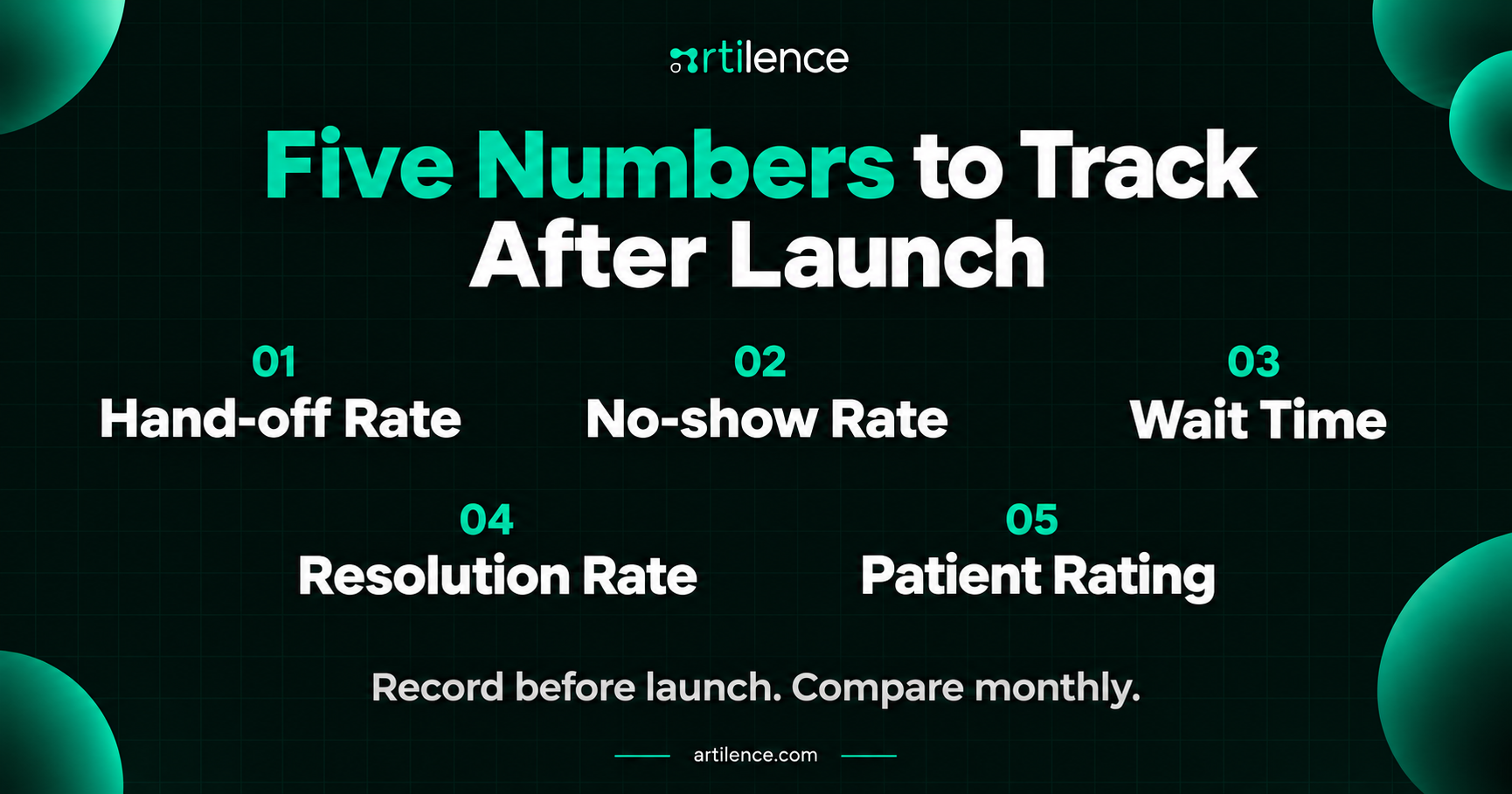
Five Numbers to Track After Launch
You cannot improve what you do not measure. So, pick a few clear numbers and check them each month. They show whether conversational AI in healthcare is paying off.
- Hand-off rate: how often a chat moves to a person.
- No-show rate: how many booked patients miss their visit.
- Wait time: how long patients wait for a reply.
- Resolution rate: how many questions end with a clear answer.
- Patient rating: the score patients give after a chat.
First, record these numbers before launch. Then compare them each month. If no-shows drop, your AI appointment scheduling is working. If hand-offs stay very high, the assistant needs better training. Meanwhile, read a small sample of real chats. They show problems that numbers hide.
A Simple Way to Start
Do not launch everything at once. Instead, pick one pain point for your conversational AI in healthcare plan. For many clinics, AI appointment scheduling is the easiest first step. It is clear, easy to measure, and low risk.
Next, write the rules with your staff. Ask the front desk which questions they hear most. Then test with sample data, never live patient records. Run a small pilot for a few weeks. Afterward, review the chats and fix any gaps.
Once the first task works, add another. Perhaps add voice AI in healthcare or a second language. Growth should follow results, not hype.
If you want help planning, Artilence builds custom AI automation for healthtech teams. A short talk can show which workflow to start with. In the end, the goal is not to replace people. It is to give people more time for care. That is the true promise of conversational AI in healthcare.
Frequently Asked Questions
What is conversational AI in healthcare?
It is software that chats with patients using everyday language, by text or voice. It can answer common questions, book visits, and send reminders. Staff stay in charge of anything complex.
How is conversational AI used in healthcare?
Clinics use it for scheduling, reminders, intake forms, billing questions, and after-hours help. Some also use it to sort nurse-line messages by urgency. Each task follows rules the clinic sets.
What are the benefits of conversational AI in healthcare?
Patients get quick answers at any hour. Staff spend less time on repeat calls and paperwork. Clinics may also see fewer missed visits and shorter wait times.
What are examples of conversational AI in healthcare?
Common examples include a chat window that books visits and a voice line that answers billing questions. Others include text reminders before a visit and a virtual assistant that explains test prep. Many tools combine several of these jobs.
Is conversational AI in healthcare safe?
It can be safe when a clinic sets firm limits and tests them often. The tool should never diagnose, and it should send urgent cases to a person. When it handles patient records, it must also follow HIPAA rules.
Will conversational AI replace doctors and nurses?
No. It handles routine, repeat tasks, while trained people handle care and judgment. The goal is to free staff for work that needs a human touch.
What is the difference between a chatbot and conversational AI?
A basic chatbot follows fixed scripts and picks from set answers. Conversational AI understands free-form language and can handle many ways of asking one question. Many modern tools blend both ideas.
What are the challenges of conversational AI in healthcare?
Common challenges include privacy, wrong answers, and patients who prefer a human. Poor links to scheduling or record systems can also limit results. Careful testing and clear hand-off rules reduce these risks.
How does voice AI help patients?
Voice AI lets people speak instead of type, which helps older adults and people with vision or movement limits. It can read instructions slowly and repeat them. Callers should always be able to reach a real person.
What is the future of conversational AI in healthcare?
Expect more voice tools, more languages, and closer links to scheduling and billing systems. Patients will likely want faster, clearer service at any hour. Clinics that start small and measure results will adapt best.
Artilence Newsletter
Don't worry your email is secure with us, We will use it to share the latest updates straight to your inbox!
By subscribing, you agree to our Privacy Policy.
Ready to Build Something Great?
Book a free strategy call with our team and let's turn your idea into reality.
Related Insights



AI is our language, we speak it fluently. Let's innovate together.




Services
Artilence Newsletter
Don't worry your email is secure with us, We will use to share latest updates straight to your inbox!
By subscribing, you agree to our Privacy Policy.


