


Ready to Build Something Great?
Book a free strategy call with our team and let's turn your idea into reality.
Share This Blog
Software Development Services Company: Plan Your Build With Confidence
A software development services company should fix a clear business problem. Your staff may spend hours copying sales data. Or your buyers may struggle to place orders. First, find the task that wastes time. Then decide what a better process should do.
Price matters, but it is only one part of the choice. You also need clear plans, safe access, and help after launch. This guide shows US business owners what to check before they hire.
Find the Problem Before You Buy the Software
Think of a parts shop in Ohio. Its staff take orders by email. Then they check stock in a sheet. Next, they open a billing tool.
Each task is small. However, the full process can be slow. A wrong item code can also lead to a failed order.
A new website may not fix this. Instead, the shop may need one tool that links orders, stock, and bills.
Before you seek custom software development services, ask:
- Which task takes too long?
- Where do staff make errors?
- What details get typed twice?
- Who needs access to the data?
- What result would make the work easier?
Then choose one goal to track. For example, measure how long staff spend on each order.
Pick the Service That Fits Your Need
A software development services company may offer many types of work. However, you do not need to buy them all.
Start with your goal. Then choose the service that fits.
Online Tools for Your Buyers
Use web application development services when people need to act on your site.
For example, they may need to book a visit. They might also need to send files, pay a bill, or track an order.
The parts shop could let buyers place repeat orders online. As a result, staff would have fewer calls to handle.
Keep each step clear. Users should know what to click and what happens next.
Tools Built for Your Work Rules
Some firms have needs that standard tools cannot meet. In that case, explore custom software development services.
For example, a repair firm may set prices based on parts and travel time. It may also offer different rates to clients with service plans.
A custom tool could apply those rules in one place.
However, check ready-made tools first. A small change to an existing tool may be enough.
Links Between the Tools You Own
You may already have useful software. Yet your staff may still move data by hand.
For instance, they may copy each sale into a billing tool. A link between the two could remove that task.
Also, ask what happens when the link fails. The system should flag the fault and help staff fix it.
Extra Skills for Your Team
Software development outsourcing can help when your team lacks time or a key skill.
For example, your staff could guide the work while an outside team builds a new feature.
First, name the person who will check the work. Then agree on who will fix faults after launch.
Give Each Team the Same Project Brief
Quotes are hard to compare when they cover different work.
So, write a short brief before you contact a software development services company. List your users, main tasks, current tools, and target date.
Also, state what can wait.
The parts shop may need stock checks and orders first. Sales charts could come later.
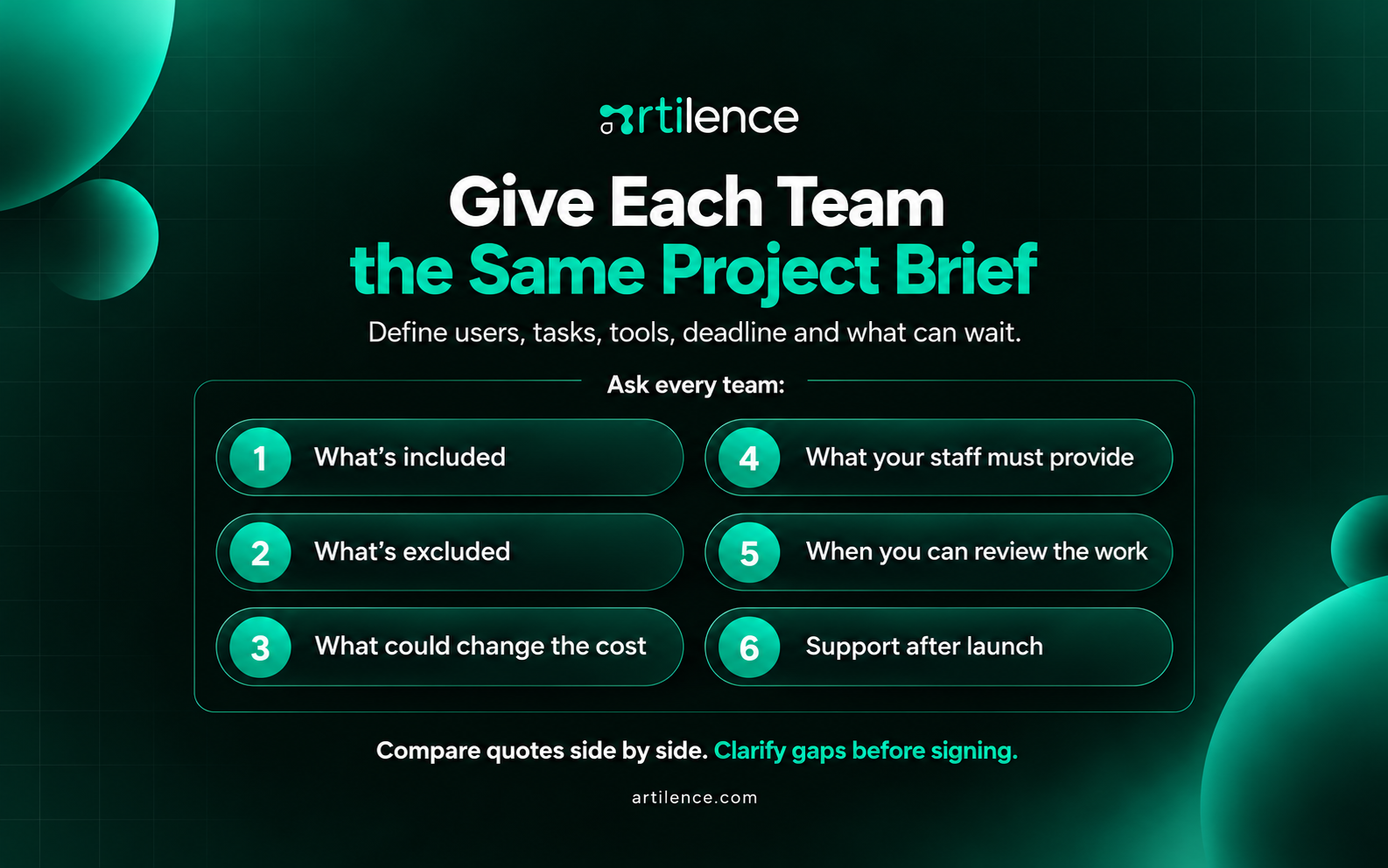
Ask each team to explain:
- What the price includes.
- What the price leaves out.
- Which details could change the cost.
- What your staff must provide.
- When you can review the work.
- What help you get after launch.
Then read the offers side by side. If a quote lacks detail, ask for a clear answer before you sign.
Ask a Software Development Services Company to Show Its Thinking
A sales pitch can look great. However, it may reveal little about how a team solves problems.
Instead, give the team one real task from your business. Ask them to walk through the steps.
For an order tool, ask these questions:
- What if an item sells out?
- What if a card payment fails?
- Can two staff change the same order?
- Can a buyer see someone else’s bill?
- What if the stock tool goes offline?
The answers should make sense to you. Also, the team should ask about your rules and needs.
When you compare web application development services, ask to see related work. Then check which parts the team built.
This gives you more useful proof than a list of skills.
Check the Full Cost, Not Just the Build
The build price is only part of the budget.
You may also pay for hosting, paid tools, data cleanup, and support. Therefore, ask what the first year could cost.
Use these questions when you review each quote:
| Cost area | Question to ask |
| Planning | Will you review how our staff work? |
| Design | How many screens and edits are included? |
| Build | Which tasks will the software handle? |
| Testing | Who checks errors and user access? |
| Data | Who cleans and moves our old records? |
| Launch | Who sets up the live tool? |
| Support | What help is included after launch? |
For example, a low quote may leave data cleanup to your staff. Another team may include it in the price.
So, ask each software development services company to explain those gaps. This helps you compare the real value of each offer.
Choose a Payment Plan That Fits the Work
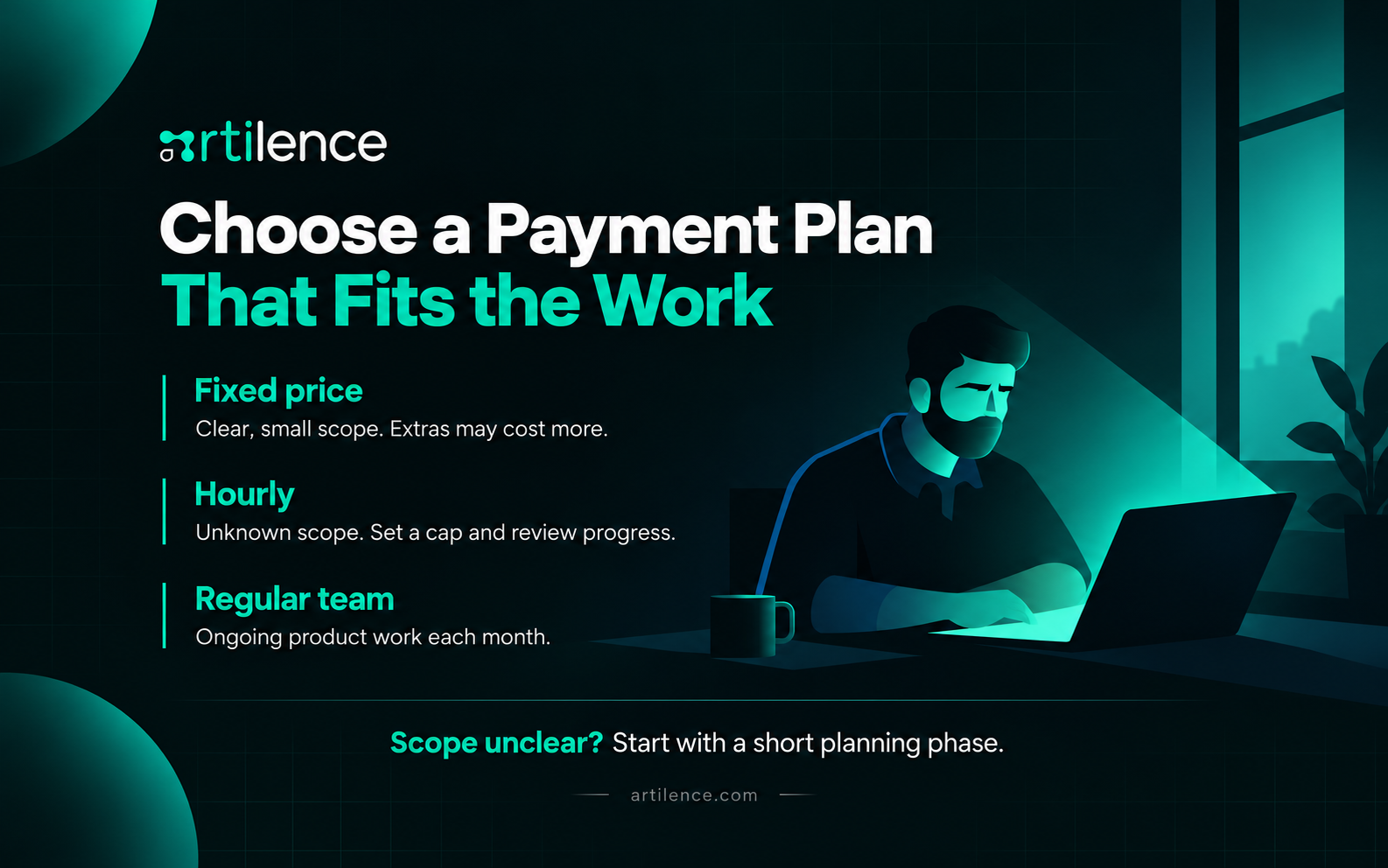
A fixed price can suit a small job with clear needs. However, extra features may cost more.
Hourly work can suit a project with unknown parts. In that case, set a spending limit and check progress often.
A regular team may fit a product that needs work each month.
With software development outsourcing, the payment plan should match the scope. First, list what you know. Then note what the team still needs to check.
If the scope is unclear, start with a short planning phase. Use the results to decide what to fund next.
Build One Useful Flow First
Your first version should do one job well.
For the parts shop, a buyer should find an item and place an order. Then the tool should confirm the order.
Extra charts and reports can wait.
Ask your software development services company to show working features at set review points. Next, let staff test them with sample data.
Also, agree on what “done” means.
For example: “A buyer can open their own bill. They cannot open another buyer’s bill.”
This gives both sides a clear test. As a result, there is less room for doubt about the work.
Keep Control of Your Code and Accounts
Before launch, ask who holds the code and key accounts.
Also, get the ownership terms in writing. Some parts may use code or tools owned by other firms.
Your staff should know how to export records. They should also know how to reach the support team.
Next, ask for clear setup notes. These should help a new developer understand the tool.
A handover plan matters if you change vendors. Therefore, discuss access and ownership before the build starts.
Make Support Fit Your US Work Hours
If a fault stops work at 9 a.m. Eastern, who will help?
First, agree on shared work hours. Then choose a main contact and a route for urgent issues.
Also, ask how soon the team will respond. A quick reply does not always mean a quick fix.
Your software maintenance and support plan should explain what is covered. This may include bug fixes, updates, backups, and checks.
Then ask which requests cost extra.
Before launch, test a backup restore. After all, a saved copy must work when you need it.
Discuss Your Next Build With Artilence
Artilence works with software, AI/ML, and tools that reduce manual tasks. Start by sharing one process that wastes time or causes errors. Then ask whether custom software development services fit the need. If users need an online tool, discuss web application development services and links to your current systems. Also, ask for relevant work samples and a clear scope. Finally, include software maintenance and support so help after launch is part of the plan.
Start With a Problem You Can Measure
Choose a software development services company that can explain how its work will help. Then compare the scope, costs, work samples, and support terms.
Frequently Asked Questions
1. What does a software development services company do?
It plans, builds, tests, and supports software for a business. For example, it may build an order portal or link tools you already use.
2. What are the top software development companies in the USA?
IBM Consulting and Slalom Build are two options to review for custom software work. However, they are examples, not a ranked list. Compare firms by skills, project fit, cost, and support.
3. How much does custom software cost?
The cost depends on the tasks, data, and tool links involved. So, ask for a quote that separates the build price from monthly fees.
4. How long does a software project take?
The scope, technical needs, and review process affect the time required. Therefore, ask for a plan with clear dates for builds, tests, and launch.
5. Should I buy an existing tool or build one?
First, check if a ready-made tool meets your main needs. If it leaves costly gaps, compare a custom build with the cost of those gaps.
6. Can a small business outsource software work?
Yes, software development outsourcing can cover a small task or a full build. However, set a clear scope, a budget limit, and one person to approve the work.
7. Who owns the code after the project ends?
The contract and third-party licenses set the ownership terms. So, confirm who owns the code, designs, and data before work starts.
8. Can new software work with our current tools?
Often, yes, but the team must check how those tools share data. Also, ask about added fees, access limits, and failed transfers.
9. What happens after the software goes live?
Your software maintenance and support plan should set out the next steps. For example, it should name who handles faults, backups, updates, and new requests.
10. What should I bring when I ask for a quote?
List the problem, users, key tasks, and tools you use now. Then add your budget range and target date so the team can suggest a clear first step.
Artilence Newsletter
Don't worry your email is secure with us, We will use it to share the latest updates straight to your inbox!
By subscribing, you agree to our Privacy Policy.
Ready to Build Something Great?
Book a free strategy call with our team and let's turn your idea into reality.
Related Insights


AI is our language, we speak it fluently. Let's innovate together.




Services
Artilence Newsletter
Don't worry your email is secure with us, We will use to share latest updates straight to your inbox!
By subscribing, you agree to our Privacy Policy.


